

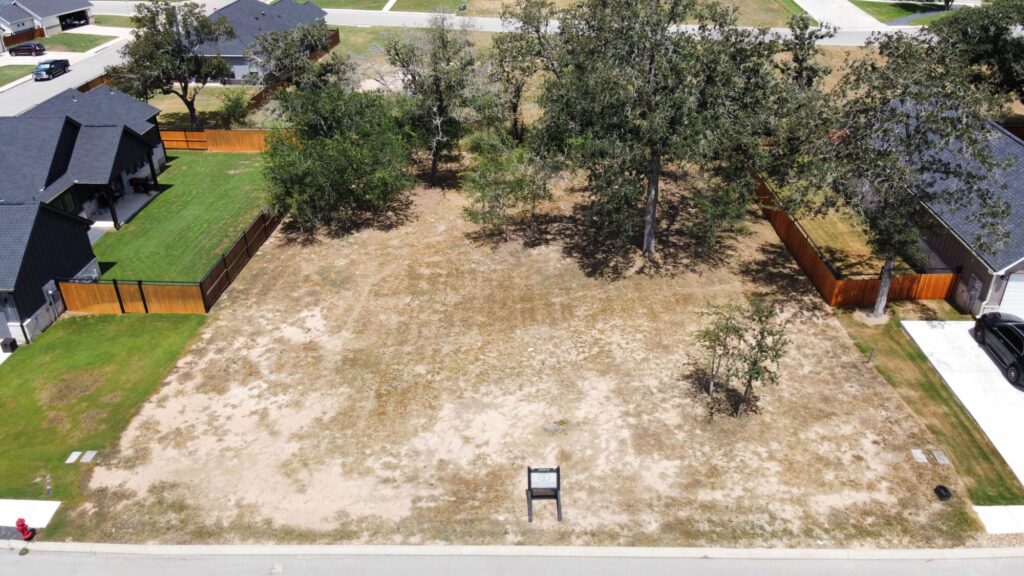
If you already own land in Wilson County, you have cleared one major hurdle in the custom home building process. But before construction can begin, your property needs to be evaluated for everything from water and wastewater to access, drainage, soil conditions, and foundation requirements.
When building on your own land in Wilson County, Texas, the work that happens before the slab is poured can have a major impact on the schedule, budget, and long-term performance of your home.
This is the deeper dive into the Site Preparation & Foundation stage of The Silver T Process. Understanding these early steps can help you avoid delays and make better decisions before construction begins.
What do I need to know before building on land I already own in Wilson County?
Before building on your land, you need to determine how the property will receive water, handle wastewater, provide construction access, manage drainage, and support the home’s foundation. These items should be evaluated while the home is being designed so they do not become unexpected obstacles immediately before construction.
Owning the property does not necessarily mean it is ready for a house.
Rural and acreage properties can vary significantly from one tract to another. Two neighboring properties may have different soil conditions, drainage patterns, utility availability, septic requirements, or water well considerations.
A smart planning sequence typically looks like this:
- Evaluate the homesite and soil conditions.
- Determine the water source and potential well location.
- Complete the OSSF site evaluation and septic design.
- Begin required county permitting.
- Establish driveway and construction access.
- Finalize grading, drainage, and site preparation.
- Engineer the appropriate foundation for the home and property.
The biggest mistake is waiting until the house plans are completely finished before starting these conversations. Site conditions can affect where the home sits, where the driveway enters the property, where a well can be drilled, and where the septic system can be installed.
What is a perc test, and why does it matter when building a custom home?
A “perc test” is a common term homeowners use for evaluating whether land can support a septic system. In Texas, the process typically involves a licensed OSSF site evaluation that examines soil characteristics, available space, groundwater conditions, slopes, and other property features to determine which septic systems are suitable.
The results can directly influence your septic system for a custom home in Texas.
Not every property can use the same type of system. Soil texture, restrictive layers, groundwater conditions, lot layout, and the proposed location of the home can all affect the design.
That is why the septic evaluation should happen early. Discovering late in the process that the preferred drainfield location conflicts with the house, driveway, well, pool, shop, or another planned improvement can require redesigning the site.
For custom homes on acreage, it is helpful to think about the entire property rather than just the footprint of the house.
Do I need a water well for a custom home in Wilson County?
Not necessarily. If a public or community water system serves your property and a connection is available, you may be able to use that service. Many rural properties, however, rely on private wells, which means the well location, groundwater availability, local regulations, septic setbacks, and future property plans should all be evaluated early.
Water well planning for a custom home in the Hill Country and South Texas is more than choosing an open spot near the house.
The well has to fit into the overall site plan.
Texas Water Development Board guidance notes that private well requirements can also be affected by groundwater conservation districts and other local authorities. State well-siting guidance includes minimum separation distances between wells and potential contamination sources, including septic tanks and drainfields.
For example, state guidance generally calls for a new well to be at least 50 feet from a septic tank and 100 feet from a septic drainfield or spray area when applicable construction standards are met. Local requirements may be more restrictive.
That is one reason the well and septic system should be planned together.
You also want to consider the home’s location, driveway, future workshop or barn, outdoor living areas, pool plans, livestock areas, and other long-term improvements before settling on a well location.
Do I need a septic system if I’m building outside city limits?
If your property is outside a municipal sewer service area and no public wastewater connection is available, you will generally need an on-site sewage facility, commonly called a septic system. Being outside city limits does not automatically mean septic is required, so utility availability should be confirmed for the specific property.
In Texas, septic systems are regulated as On-Site Sewage Facilities, or OSSFs.
TCEQ establishes statewide OSSF requirements, but local authorized permitting authorities often administer septic permits. TCEQ states that a permit and approved plan are generally required before constructing, altering, repairing, extending, or operating an OSSF, subject to limited exemptions.
For a Wilson County property, homeowners should follow the county’s current requirements. Wilson County specifically states that permits are required for development, driveways, and septic systems.
This is another reason septic planning belongs near the beginning of the custom home process rather than at the end.
How does the septic design and permitting process work in Wilson County?
The process generally begins with a licensed site evaluation, followed by selecting and designing an appropriate OSSF for the property’s conditions. Required plans and applications are then submitted to the applicable permitting authority. In Wilson County, septic permitting is handled locally under Texas OSSF rules rather than routinely being submitted directly to TCEQ.
The site evaluation looks at more than whether wastewater will simply “drain.”
TCEQ guidance states that the evaluation includes a survey of the property, soil analysis in the proposed disposal area, and other conditions necessary to determine which type of system is appropriate.
Once those conditions are understood, the septic system can be designed around the home, well, setbacks, property lines, and available disposal area.
TCEQ requires permitting authorities to approve or deny submitted planning materials and permit applications within 30 days of receipt. However, that regulatory review period is only one part of the total timeline. Site evaluations, engineering or design, revisions, contractor availability, inspections, and installation can extend the overall process.
When should well and septic planning start during the custom home process?
Well and septic planning should begin alongside home design, not after the plans are finished. As a practical planning allowance, well and septic work can add roughly 60 to 120 days when evaluations, design, permitting, drilling, installation, inspections, and contractor scheduling are not started early enough.
That does not mean homeowners should wait 60 to 120 days before anything else can happen.
The goal is to overlap these activities.
While plans, specifications, financing, and other preconstruction decisions are moving forward, the property can also be evaluated for soil conditions, septic design, utilities, and foundation requirements.
That closely mirrors Silver T Construction’s existing process. During the Construction Kick-Off phase, Silver T works through administrative and preconstruction items including permitting, soil samples, slab engineering, and septic design so the project is positioned to move toward groundbreaking once the necessary approvals are in place.
Starting these items early gives the design and site work a chance to work together rather than compete with each other later.
What site preparation does rural land need before construction starts?
Site preparation creates a safe, buildable area for the home and construction crews. Depending on the property, this can include clearing vegetation, establishing construction access, grading the homesite, addressing drainage, preparing utility routes, determining finished floor elevation, and creating suitable conditions for foundation construction.
Site prep for rural land in Texas can look very different from preparing a homesite inside a developed subdivision.
A property may need brush cleared, an existing ranch entrance improved, trees selectively removed, low areas addressed, or additional work to create reliable construction access.
Drainage deserves particular attention. Water should move away from the future home rather than being trapped around the foundation. The location of roads, culverts, neighboring drainage areas, slopes, and natural runoff can influence how the site is graded.
Construction access matters too. In Wilson County, driveway work is part of the county’s permitting requirements, and the county provides a PIPROW permit process and driveway specifications.
Thinking about access before heavy construction begins makes it easier for concrete trucks, equipment, delivery vehicles, and trade contractors to safely reach the homesite.
How is the right foundation determined for my property?
The foundation should be designed for the specific home and site rather than treated as a one-size-fits-all decision. Soil conditions, structural loads, elevations, drainage, house design, and engineering requirements all contribute to determining how the slab or other foundation system should be constructed for long-term performance.
Silver T incorporates soil sampling and slab engineering into the preconstruction process before breaking ground.
This is why the foundation decision comes after the property has been evaluated.
The design of the house matters, but so does the ground supporting it. Engineers use the information gathered during planning to develop foundation specifications appropriate for the project.
Once the homesite is prepared and the engineered foundation is ready to move forward, the project can transition from planning the land to physically building the home.

Does the process change if I’m building outside Wilson County?
Yes. The general planning principles are similar, but permitting authorities, application requirements, groundwater rules, inspection procedures, and review timelines can vary by location. Silver T builds in Wilson, Guadalupe, Bexar, Bandera, Medina, and Gonzales counties, so each project should be evaluated according to the requirements for the specific property.
A process that works for acreage in Wilson County may not be identical to one in Bandera or Medina County.
Some properties may fall under different groundwater conservation districts. Counties may administer OSSF programs differently. Driveway requirements may depend on whether access is from a county road, state highway, or another type of roadway.
That is why local knowledge and early coordination matter when building on your own land.
The home may be custom, but the preconstruction plan needs to be custom too.
How does site preparation fit into The Silver T Process?
Site preparation and foundation work form the bridge between planning your custom home and actually building it. Silver T’s process addresses permitting, soil sampling, septic design, foundation engineering, and other preconstruction details before moving into site preparation, foundation construction, framing, mechanical rough-in, finishes, and final completion.
For homeowners building on acreage, this stage is especially important.
Your land already has its own characteristics. The goal is to design and position the home in a way that works with those conditions while considering how the property will function for years to come.
That means thinking beyond today’s house plans to future shops, pools, outdoor spaces, livestock areas, additional structures, and how your family plans to use the land.
Ready to build a custom home on your own land?
If you own property in Wilson County or the surrounding Central and South Texas region, early site planning can make the transition from landowner to homeowner much smoother. Understanding your well, septic, access, soil, drainage, and foundation needs before breaking ground helps create a clearer path into construction.
Silver T Construction guides homeowners through the planning and building process with careful coordination from the first plans through the final walk-through.
If you’re considering building on family land, acreage, or property you already own, contact Silver T Construction to start planning your custom home.
Frequently Asked Questions
Do I need a well and septic if I'm building outside city limits?
Not always. Properties without access to a public water system may require a private well, while properties without public sewer service typically need an approved OSSF or septic system. Because utility availability varies by property, confirm water and wastewater options before finalizing the home’s location and site plan.
How long does septic permitting take in Texas?
TCEQ rules generally require a permitting authority to approve or deny a completed OSSF permit application and planning materials within 30 days of receipt. The entire process can take longer because the site evaluation, septic design, revisions, installer scheduling, construction, and inspections occur in addition to the formal permit review.
What is a perc test and why does it matter?
A perc test is a common term for evaluating land for septic suitability. In Texas, homeowners will typically need an OSSF site evaluation that includes soil analysis and other property conditions. The results help determine which septic treatment and disposal methods are appropriate for the homesite.


